New programme launched to awaken potential at Huntly College and Ngaaruawaahia High School
A new programme launched at Huntly College last week is intended to give rangatahi more time, space and support to find their strengths in their own communities, especially when the usual classroom model is not working for them.
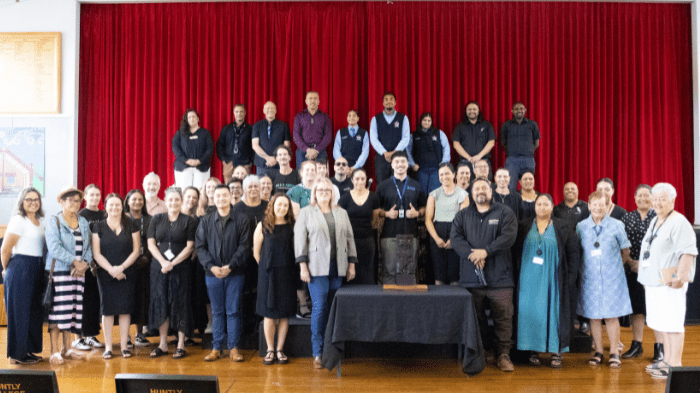
On 27 November, Pinnacle joined Raahui Pookeka (Huntly) College, Ngaaruawaahia High School, rangatahi, school leaders and community providers for the launch of Taakiri Tuu Te Rangatahi, a new 20-week programme for students from the two kura that weaves health, education and community into something deliberately hopeful.
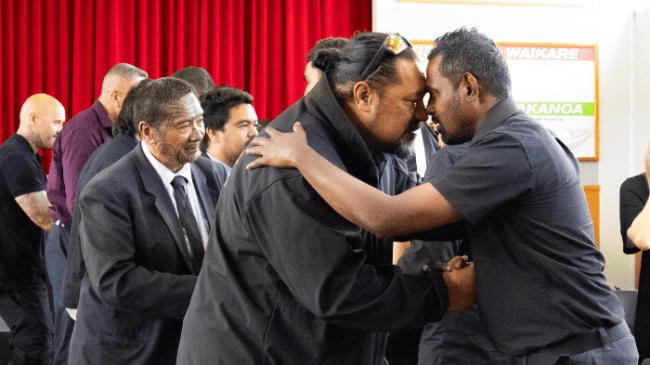
Hosted by Whaea Rachael Parker and the Huntly College team, the launch opened with a pōwhiri, with manuhiri led on by Pinnacle kaumātua Matua Atutahi Chris Riki and Taakiri Tuu Te Rangatahi programme lead Donson (Donny) Pique carrying a taonga carved by Randall Dennis.
Teresa McGovern, Pinnacle services manager, School Based Health Services, set out the why behind the programme.
“Across our region, from Taupō to the Coromandel, Pinnacle school-based health services bring care to where it matters most, kura. Thirty school nurses and 18 nurse practitioner and GP contractors create safe spaces for rangatahi to be heard and supported, often in schools with only a few hundred students, where a nurse might only be on site a few days each fortnight,” said Teresa.
“Even with limited hours, clinicians make differences that last far beyond the clinic doors. This mahi is not just about health, it is about equity, it is about trust, and it is about hope.”
She spoke about the very real pressures on alternative education across Waikato, with long wait lists, limited spaces, and rural rangatahi who could thrive in different learning environments if only they had the chance.
“Taakiri Tuu Te Rangatahi is about changing that story. It is not funded by any agency. Pinnacle has chosen to invest because we see our rangatahi, we believe in them, and we are building something specifically for them.”
The programme development team has put rangatahi at the centre from the start, drawing on successful models elsewhere and shaping a distinctly Waikato version through kōrero with tumuaki, whānau and students.
Donson (Donny) Pique, the Taakiri Tuu programme lead who will deliver the programme, explained the meaning behind the name: taakiri, to awaken, to bring into life, and tuu, to stand.
“Awakening something means it is already there,” said Donny. “Our rangatahi already have that fire in them and all these tools. They just need the right space to explore it and recognise it.”
Over two school terms, students from Huntly College and Ngaaruawaahia High School will spend one day a week in the programme, alternating between class-based days and excursion days with local providers and businesses.
The kaupapa is built around four pou: taiao (connection to environment), hauora (wellbeing), ahurea (culture and identity) and ara (pathways and future options).
Ngaaruawaahia High School principal Whaea Rebecca (Becks) Hodgson spoke about what it means to serve her tauira and community, and why Taakiri Tuu Te Rangatahi matters for young people who need more than a one-size-fits-all pathway. She reminded the rangatahi in the room that they are taonga, and that this kaupapa is another way to help them flourish by igniting what is already in them. She also acknowledged the strength of the partnership between the two kura and Pinnacle, and welcomed ongoing collaboration as the programme takes shape.
Pinnacle GM Māori Health and Equity Rawiri Blundell grounded the launch in a bigger picture of equity, Te Tiriti o Waitangi and what it really means to support rangatahi.
He described Taakiri Tuu Te Rangatahi as more than a programme, but a haerenga that recognises the mana of rangatahi and walks alongside them as they learn who they are, where they are from and where they are going.
He shared a simple line from one of his sons, who came through kura kaupapa, kōhanga reo and wānanga. When asked why so many of his peers made it all the way through to year 13, his son replied:
“Because they care about us.”
That sentence, Rawiri said, has stayed with him for years.
“When rangatahi are wrapped in the support of their kura, teachers, communities and whānau, they can achieve anything. Programmes like Taakiri Tuu Te Rangatahi are not a luxury, they are a necessity if we are serious about equity, about achievement rates and about uplifting Māori communities.
“We cannot let kaupapa like this be fleeting moments. They need to become a lasting legacy.”
Waikato district councillor Marlene Raumati shared her lived experience of opportunity and identity. She reflected on growing up at a time when te reo Māori was not an option at school and university felt out of reach.
To the rangatahi in the room, her message was clear: hold on to your language, your tikanga, your traditions and your identity, and grasp every opportunity that comes your way, whether or not it works out the way you expect. Each step is part of the learning.
She also acknowledged local leaders and health sector experience in the room, including Dr Robin Baird from Te Kauwhata Health Centre and Michelle Nathan, a Pinnacle board member with deep knowledge of indigenous and general health.
As Taakiri Tuu Te Rangatahi moves from launch into weekly reality next term, the hope is that more rangatahi feel seen, heard and believed in, more whānau notice new confidence and options opening up, and kura, health and community partners continue to work side by side to make those opportunities real.
Dr Jo Scott-Jones shares his thoughts on the workforce crisis, likening it to the perceived impossibility of the Chernobyl disaster.
Read moreBay of Plenty/Waikato Faculty of RNZCGP invites all GPs (including non-faculty members) and GP registrars in the GPEP programme (years 1-3) to register for collegial support service – Ka Hono.
Read moreThis new programme is a collaboration between Te Runanga o Kirikiriroa (Facilitation Service) and general practices.
View detailsGPs in each of our districts get frustrated when they hit barriers when seeking interventions from other providers. There is a perception that DHB services are becoming more difficult to access and that different DHBs have different levels of service available to their communities. This page outlines our process for advocating alongside practices.